If you’ve spent any time on TikTok, Instagram, or YouTube recently, you’ve probably run into the term “looksmaxxing” — along with a cluster of related slang like mewing, canthal tilt, hunter eyes, and mogging. Search interest in the term jumped sharply in early 2026, and it’s now reached far beyond the niche forums where it started. Some of what gets discussed under this label is genuinely reasonable. Some of it is unproven. And a small, alarming slice of it is actively dangerous. This guide breaks down exactly which is which.
What Is Looksmaxxing?
Looksmaxxing is an online culture, largely built around young men and teenage boys, focused on “optimizing” physical appearance — sometimes through completely ordinary self-care, and sometimes through unproven or risky interventions. The term originated years ago in incel and “manosphere” internet forums, where appearance was treated as the central explanation for social and dating outcomes, before spreading into mainstream platforms like TikTok, where it’s now been viewed hundreds of millions of times under related hashtags.
The core split within the community is between two categories:
Softmaxxing covers conventional, genuinely reasonable self-improvement: skincare routines, fitness, grooming, better sleep, posture, and dressing in a way that suits your actual proportions. Nothing here is exotic — it’s standard self-care, just rebranded with trend-friendly language.
Hardmaxxing covers far more extreme measures: unapproved supplements, severe dietary restriction, cosmetic surgery, and — at the furthest end — deliberate self-injury intended to reshape facial bone. This is where the real concern lives, and where medical experts have been increasingly vocal.
The Vocabulary, Decoded
Part of what makes looksmaxxing content feel intimidating or authoritative is the specialized vocabulary. A quick, plain-language glossary:
- Canthal tilt — the angle of the outer corner of your eye relative to the inner corner. A slight upward tilt gets called “positive” or a “hunter eye” shape in this community; this is simply a description of eye shape, not a measurement of anything meaningful about you.
- IPD (interpupillary distance) — the distance between your pupils, used within these communities to judge whether eyes are set “correctly.”
- Mogging — slang for one person being perceived as more conventionally attractive than another in a comparison.
- PSL — short for “Perfectly Symmetrical Looks” (sometimes rendered differently), used as an informal, entirely subjective attractiveness scale.
It’s worth naming clearly what all of this vocabulary has in common: it repackages ordinary facial variation as a set of flaws to be “fixed,” using clinical-sounding language that makes subjective beauty preferences feel like objective, measurable facts. They aren’t.
What Looksmaxxing Gets Right
To be fair to the parts of this trend worth taking seriously: skincare, fitness, grooming, sleep, and dressing to suit your actual proportions are all genuinely reasonable things to care about, and none of that requires buying into the more extreme parts of the culture. A well-fitted haircut or a pair of glasses chosen for your actual face shape is a completely legitimate version of “softmaxxing” — the kind of thing a stylist or optician has always recommended, just with newer branding attached.
Does Mewing Actually Work?
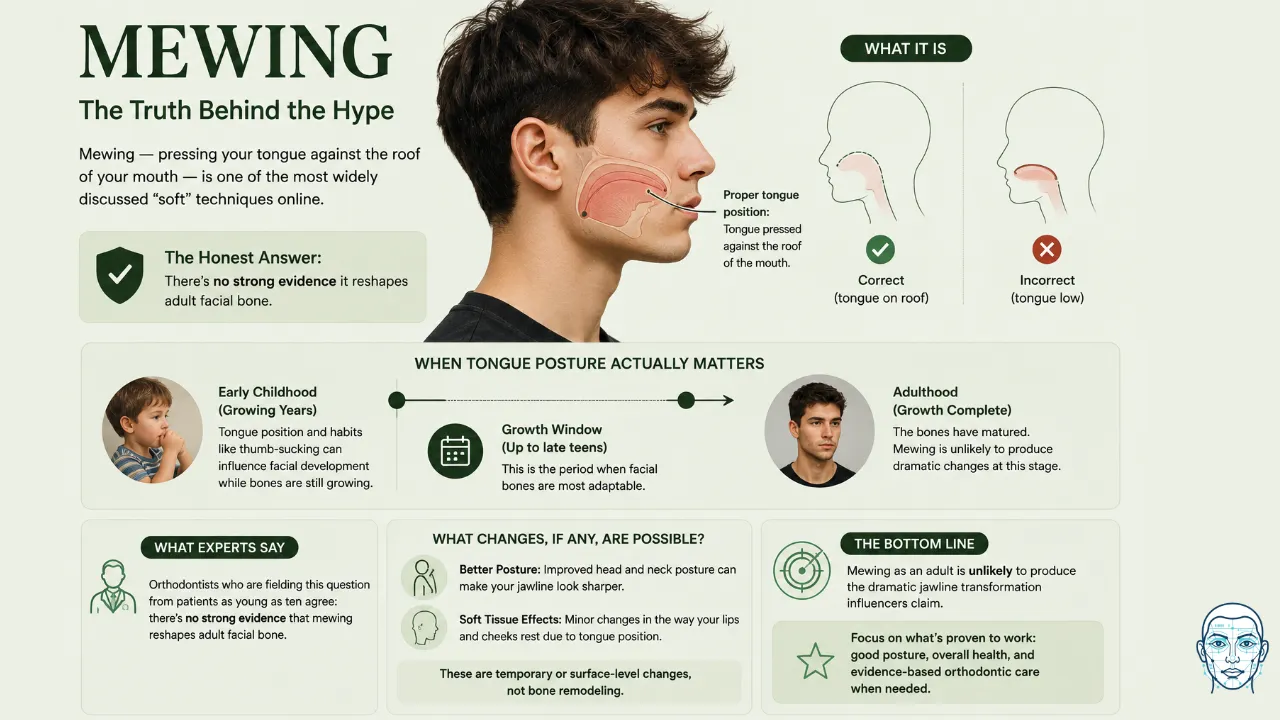
Mewing — pressing your tongue against the roof of your mouth, based on ideas popularized by a father-son pair of dentists (one of whom lost his dental license, the other of whom has faced professional misconduct proceedings) — is one of the most widely discussed “soft” techniques. The honest answer, according to orthodontists who are fielding this question from patients as young as ten: there’s no strong evidence it reshapes adult facial bone.
Tongue position and habits like thumb-sucking can genuinely influence facial development in early childhood, while the bones are still growing, but that window closes — mewing as an adult is unlikely to produce the dramatic jawline transformation influencers claim, and any visible difference reported is more likely posture or temporary soft tissue changes than actual bone remodeling.
Bone Smashing: Why This One Is Different
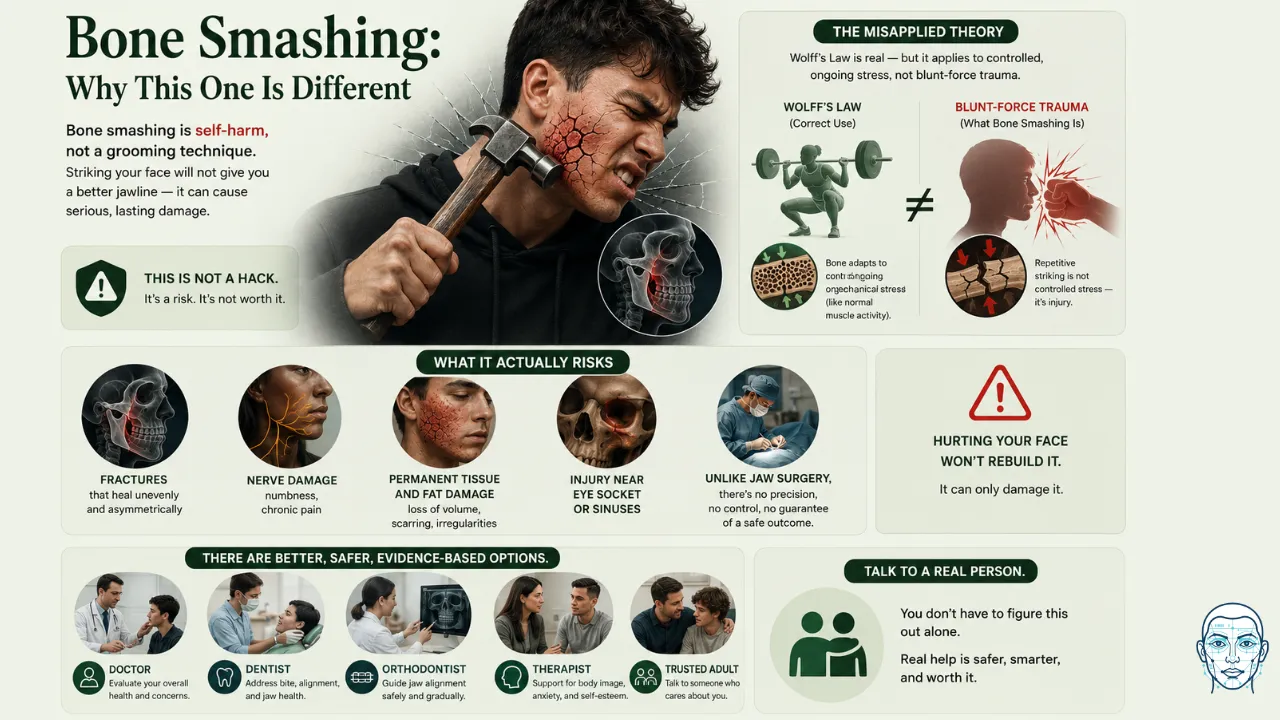
This is the part of looksmaxxing culture that deserves to be named plainly: bone smashing — repeatedly striking the face, jaw, or cheekbones with a hammer, fist, or other object — is a genuine act of self-harm, not a grooming technique, whatever language surrounds it online.
The theory behind it misapplies a real principle (Wolff’s Law, which describes how bone adapts to controlled, ongoing mechanical stress, like the kind produced by normal muscle activity) to something it was never meant to explain: blunt-force trauma. Orthopedic surgeons and maxillofacial specialists are unambiguous about the result — it doesn’t reshape bone into a more defined jawline.
What it actually risks includes fractures that heal unevenly rather than symmetrically, nerve damage, permanent tissue and fat damage, and in some documented cases, injury near the eye socket or sinuses. Unlike a controlled surgical procedure such as jaw surgery, which a trained surgeon performs with precision, deliberately injuring your own face has no mechanism for a predictable, safe outcome.
If you or someone you know has come across this trend and is genuinely considering it: this is a moment to talk to a real person, not follow an online video. A doctor, dentist, orthodontist, or a trusted adult can help address genuine concerns about jaw or facial structure through safe, evidence-based options — and if what’s underneath the appearance concern is something heavier, a counselor or therapist is a much better resource than a forum.
The Bigger Problem: Reducing Worth to Appearance
Beyond the specific techniques, several researchers and journalists who’ve studied this space point to a common underlying thread: much of looksmaxxing culture treats physical appearance as if it directly determines a person’s social value, romantic success, or worth — language like “sexual market value” shows up frequently in these communities, treating attractiveness like a tradeable asset rather than one part of a person. That framing isn’t just inaccurate, it’s genuinely corrosive, and it’s part of why researchers have connected the rise of this culture to broader mental health struggles among the young men most exposed to it.
Facial structure has no established relationship to character, intelligence, or worth — regardless of how confidently a video with a ring light and a measuring app presents otherwise.
Where the “Looksmaxxing Jawline” Ideal Actually Comes From
It’s worth understanding why a sharp, angular jawline became the specific obsession of this culture, since the reasoning gets cited constantly across looksmaxxing content: proponents point to classical sculpture, evolutionary theory, and “golden ratio” claims about facial proportion as evidence that certain jaw shapes are objectively, universally more attractive.
In reality, these references are used far more loosely than the actual research or history supports — art-historical preferences from a specific era and culture aren’t a biological law, and the golden ratio’s application to facial beauty has been repeatedly overstated in pop psychology writing, not established as scientific consensus. This same pattern — treating a narrow, historically specific aesthetic preference as if it were objective and universal — is worth recognizing whenever it shows up, whether in looksmaxxing content or anywhere else.
Who Looksmaxxing Content Actually Targets
It’s also worth naming who this content is aimed at, since it changes how to think about encountering it. Looksmaxxing is part of a broader online ecosystem sometimes called the “manosphere,” and researchers who’ve studied the space describe its audience as overwhelmingly teenage boys and young men, often already dealing with insecurity or social anxiety before encountering this content.
Some influencers in this space monetize the audience directly, selling supplements, skincare products, or “coaching” alongside the content — which is worth keeping in mind when evaluating how objective any given piece of looksmaxxing advice actually is. A creator with a product to sell has a direct incentive to make a viewer feel there’s a problem that needs fixing.
Why This Content Spreads So Fast
Part of why bone smashing and similar extreme content circulates so widely isn’t that huge numbers of people are actually attempting it — researchers who’ve studied the trend note that social platforms reward novelty and dramatic visuals, so a shocking clip gets amplified regardless of how many viewers actually try the technique themselves. Understanding this helps put the volume of this content in perspective: a video being viewed hundreds of millions of times is a statement about what platform algorithms reward, not evidence that the underlying advice is common practice or works.
What Actually Helps (If You’re Curious About Your Face Shape)
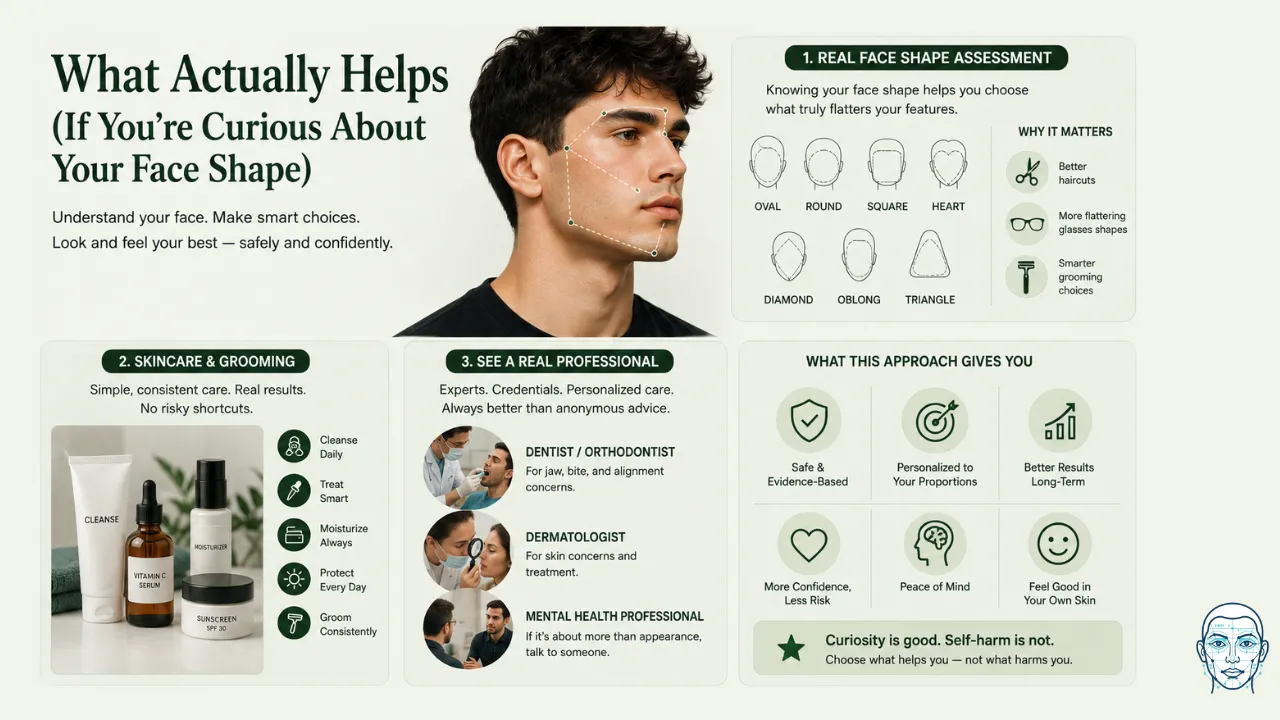
If the part of this trend that appeals to you is genuinely just wanting to understand your face better — not “fixing” it, just understanding it — that’s a completely reasonable thing to be curious about, and it doesn’t require any of the risky stuff above.
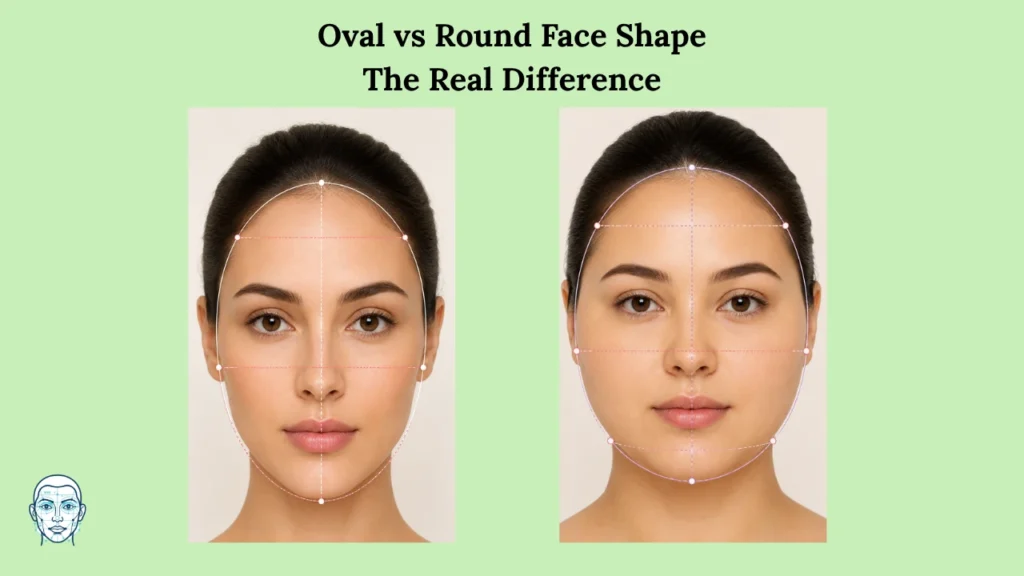
- A real face shape assessment (oval, round, square, heart, diamond, oblong, or triangle) tells you far more useful, evidence-based information than a canthal tilt measurement ever will — specifically, it tells you which haircuts, glasses shapes, and grooming choices are actually going to suit your proportions.
- Skincare and grooming are legitimate, low-risk ways to look and feel your best, with none of the risk profile of “hardmaxxing.”
- A visit to a real professional — a dentist or orthodontist for jaw or bite concerns, a dermatologist for skin concerns — will always outperform DIY advice from an anonymous internet account with no credentials.
Quick Recap
Looksmaxxing culture blends completely reasonable self-care advice with unproven techniques like mewing and, at its most extreme, genuinely dangerous self-harm like bone smashing — all wrapped in clinical-sounding vocabulary that makes subjective beauty standards feel like objective facts. The useful version of this trend is simply: understand your actual face shape, dress and groom in a way that suits it, and skip anything that involves deliberately hurting yourself or chasing a “score” that was never a real measurement to begin with.
Frequently Asked Questions
What does looksmaxxing mean?
Looksmaxxing is an online culture focused on optimizing physical appearance, ranging from conventional self-care (skincare, fitness, grooming) to unproven or genuinely dangerous techniques. It originated in incel and “manosphere” internet forums before spreading to mainstream platforms.
Is mewing actually effective?
There’s no strong evidence that mewing reshapes adult facial bone. Tongue position can influence facial development in early childhood while bones are still growing, but that window closes — any change adults report from mewing is more likely posture or temporary soft tissue effects.
Is bone smashing real, and does it work?
Bone smashing is a real practice where people strike their own face with objects to try to reshape their bone structure. It does not work as claimed, and medical experts warn it can cause fractures, nerve damage, permanent disfigurement, and other serious injuries. It’s a form of self-harm, not a grooming technique.
What’s the difference between softmaxxing and hardmaxxing?
Softmaxxing refers to conventional self-improvement — skincare, fitness, grooming, sleep, and dressing for your actual proportions. Hardmaxxing refers to more extreme or invasive measures, ranging from cosmetic surgery to genuinely dangerous self-harm practices like bone smashing.
What is canthal tilt, and does it matter?
Canthal tilt describes the angle of your eye shape — whether the outer corner sits higher or lower than the inner corner. It’s a normal anatomical variation, not a meaningful measurement of attractiveness, despite how looksmaxxing communities frame it.
Why has looksmaxxing become so popular?
Search interest and video views for looksmaxxing-related terms have grown sharply since 2025, driven largely by algorithm-friendly, visually dramatic content on platforms like TikTok. Researchers note the trend has particularly targeted teenage boys and young men through appearance-focused insecurity.
Is it bad to care about your appearance or face shape?
No — wanting to understand your face shape, dress well, and take care of your skin is completely reasonable. The concern with looksmaxxing culture isn’t caring about appearance, it’s the unproven techniques, the dangerous extremes, and the underlying message that appearance determines a person’s worth.
What should I do if I’m worried about my jawline or facial structure?
Talk to a real professional — a dentist, orthodontist, or doctor — rather than following DIY advice from social media. If appearance-related anxiety feels like a bigger, ongoing struggle, a counselor or therapist is a genuinely helpful resource, not just a doctor for the physical concern alone.
See Your Face Shape
Upload photo and get your face shape — analyzed on your device, nothing ever uploaded anywhere.
Explore all tools →