If you’ve ever stood in front of a mirror trying to decide whether your face is round or oval, you already know the problem: guessing rarely works. Most people default to “oval” simply because it’s the shape every article mentions first, not because they’ve actually confirmed it.
The good news is that finding your real face shape doesn’t take long, and it doesn’t require any special skill. You have three practical options, and by the end of this guide, you’ll know exactly which one to use and how to do it correctly.
Why Your Face Shape Actually Matters
Face shape isn’t just a fun beauty-quiz label. It’s a genuinely useful reference point for a few everyday decisions:
- Haircuts — a style that adds width works differently on a round face than on an oblong one.
- Glasses — frame shapes are designed to balance specific face proportions.
- Makeup and contouring — knowing your natural shape tells you where to add or soften definition.
- Facial hair — the same beard shape won’t suit every jawline.
None of this means you have to follow the “rules” for your shape. But knowing your shape gives you a starting point, instead of guessing blindly every time you try something new.
The 3 Ways to Find Your Face Shape
There are three realistic ways to do this, ranked from fastest-but-roughest to slowest-but-most-precise:
- The mirror method — about 30 seconds, good for a rough first guess
- The measuring tape method — about 3–5 minutes, the most accurate manual option
- An AI face shape detector — a few seconds, accurate and automatic once you have a clear photo
You don’t need to do all three. Pick the one that matches what you have on hand right now — a mirror, a tape measure, or a phone camera.
Method 1: The Mirror Method
This is the quickest way to get a rough idea, and it works best if your face shape is already fairly distinct.
- Pull all your hair back completely, including any bangs or hair near your temples. Your hairline needs to be visible.
- Stand an arm’s length from a mirror and look straight ahead, without tilting your head.
- Trace the outline of your face with your eyes, from your hairline down to your chin.
- Ask yourself: is it closer to a circle, an oval egg shape, a square, a heart, or a shape that’s clearly wider at the jaw than at the forehead?
If you land on a clear answer, that’s a solid starting point. If you’re stuck between two shapes, move on to Method 2 — measuring removes the guesswork entirely.
Method 2: The Measuring Tape Method
This is what stylists and opticians actually use, and it’s the most reliable option if you’re doing this without a photo tool. All you need is a soft measuring tape (or a piece of string and a ruler).
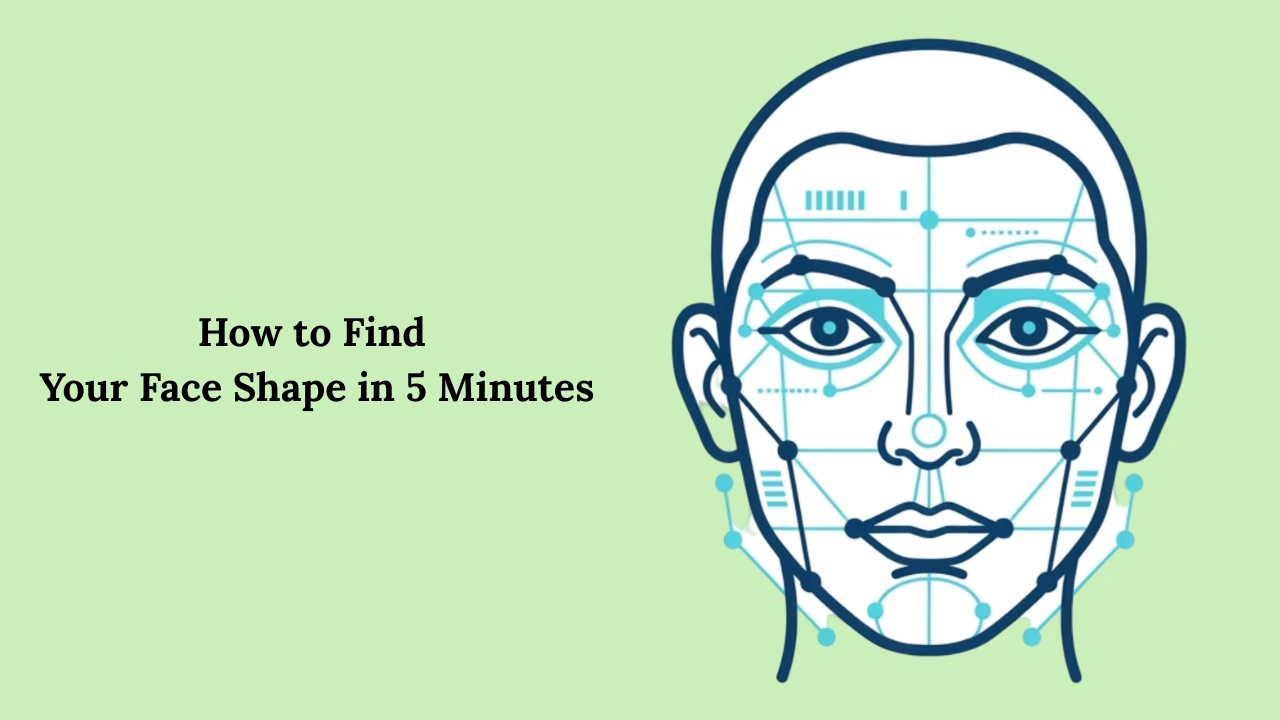
Take these four measurements, keeping the tape flat rather than curved against your skin:
- Face length — from the center of your hairline straight down to the tip of your chin.
- Forehead width — across the widest part of your forehead, roughly at eyebrow-to hairline level.
- Cheekbone width — across the highest, most prominent point of your cheekbones.
- Jawline width — from one jaw corner to the other, measuring in a straight line rather than following the curve of your jaw.
Once you have all four numbers, compare them:
- If your face length is clearly the largest number and the three widths are fairly similar, you likely have an oblong face.
- If your cheekbones are the widest measurement and your face is only slightly longer than it is wide, you likely have an oval face.
- If your face length and width are close to equal and your jawline feels soft rather than angular, you likely have a round face.
- If your face length and width are close to equal but your jawline feels sharp and defined, you likely have a square face.
- If your forehead is clearly the widest measurement and your chin comes to a point, you likely have a heart face.
- If your cheekbones are clearly wider than both your forehead and jaw, you likely have a diamond face.
- If your jawline is the widest measurement, you likely have a triangle face.
This method takes a few minutes, but it’s genuinely reliable because it’s based on real numbers instead of a visual impression, which can be easy to second-guess in a mirror.
Method 3: Use an AI Face Shape Detector
If you’d rather skip the tape measure, a face shape detector tool does the same measuring process automatically, using your photo. Modern tools use on-device face-landmark detection (the same technology behind many phone camera filters) to map dozens of points across your face, then calculate the same width and length ratios described above — instantly, and without needing to touch your face at all.
This is the fastest option if you have a clear, front-facing photo with your hair away from your face, and it’s a good way to double-check a result you got from measuring by hand.
The 7 Face Shapes at a Glance
Here’s a quick reference once you have your measurements or a tool result in hand:
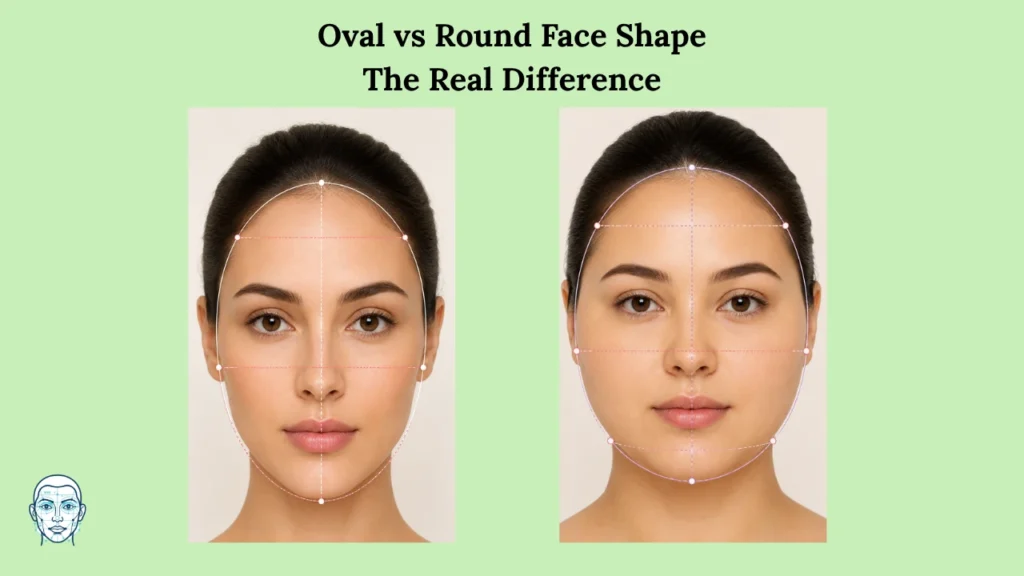
- Oval — Slightly longer than wide, cheekbones as the widest point, jaw tapers gently. Considered the most balanced, “easiest to style” shape.
- Round — Width and length are close to equal, full cheeks, soft jawline with no sharp angles.
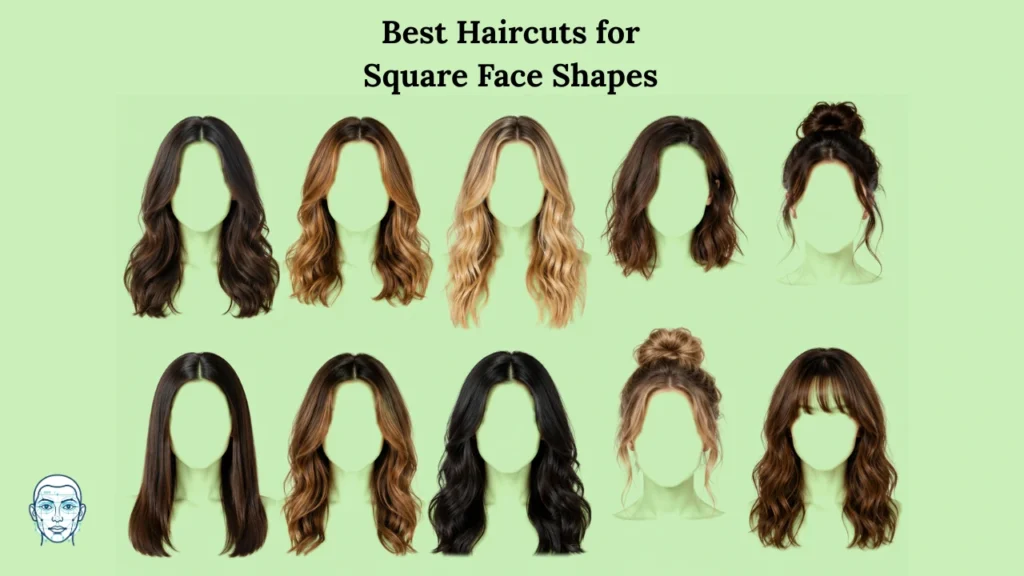
- Square — Forehead, cheekbones, and jaw are similar in width, with a strong, angular jawline.
- Heart — Forehead is the widest point, narrowing to a pointed chin.
- Diamond — Cheekbones are clearly the widest point, with a narrower forehead and jaw.
- Oblong — Noticeably longer than wide, with forehead, cheeks, and jaw fairly similar in width.
- Triangle — Jawline is the widest point, narrowing toward a smaller forehead.
It’s worth knowing that plenty of real faces sit between two categories rather than fitting one perfectly — that’s completely normal, not a sign you measured wrong.
Common Mistakes That Lead to a Wrong Result
A few small errors account for most incorrect face-shape guesses:
- Guessing from a photo at an angle. Even a slight turn changes how wide or long your face appears. Always use a straight-on photo or mirror position.
- Leaving hair in the way. Bangs, loose strands near the temples, or hair covering your ears can hide your real forehead and jaw width.
- Curving the tape measure against your skin. This adds length to your measurements and throws off the ratios. Keep it flat.
- Deciding based on one feature alone. A strong jaw doesn’t automatically mean “square” — it depends on how that measurement compares to your forehead and cheekbone width too.
What to Do Once You Know Your Face Shape
Once you’ve confirmed your shape, treat it as a helpful reference rather than a strict rulebook. Use it to:
- Ask your stylist for cuts that work with your shape, not against it
- Try on glasses styles suited to your proportions before buying online
- Adjust contouring or makeup placement based on where your face is naturally widest or narrowest
And if you ever want a second opinion, running the same photo through an AI face shape detector takes a few seconds and gives you a quick way to confirm what you found by hand.
Frequently Asked Questions
How long does it actually take to find my face shape?
With the mirror method, under a minute. With a measuring tape, around 3–5 minutes. With an AI face shape detector, just a few seconds once you have a clear photo.
What’s the most accurate way to find my face shape?
Measuring with a tape (or using a tool that measures the same ratios from a photo) is more reliable than guessing from a mirror, since it’s based on actual numbers rather than a visual impression.
Why do I keep getting a different result each time I check?
This usually comes down to photo angle, hairstyle covering your forehead or jaw, or measuring the tape curved against your skin instead of flat. Keeping the same straight-on position and flat measurements each time gives a consistent result.
Can my face shape change over time?
Bone structure is largely set by adulthood, but visible face shape can shift slightly with weight changes, aging, or muscle tone, since these affect the fullness of your cheeks and jawline.
Is it normal to not fit perfectly into one face shape category?
Yes. Many people’s faces sit between two shapes rather than matching one exactly — the categories are meant as general guides, not strict boxes.
Do I need a professional to tell me my face shape?
No. Both the measuring tape method and AI face shape detectors are designed for accurate self-assessment. A stylist’s opinion can be a helpful second check, but it isn’t required to get a reliable answer.
What’s the difference between an oval and a round face shape?
The key difference is length: oval faces are noticeably longer than they are wide, while round faces have length and width that are close to equal, with fuller cheeks.
See Face Shape Detector
Upload one photo and get your face shape — analyzed on your device, nothing ever uploaded anywhere.
Explore Face Shape Detector Tool →